

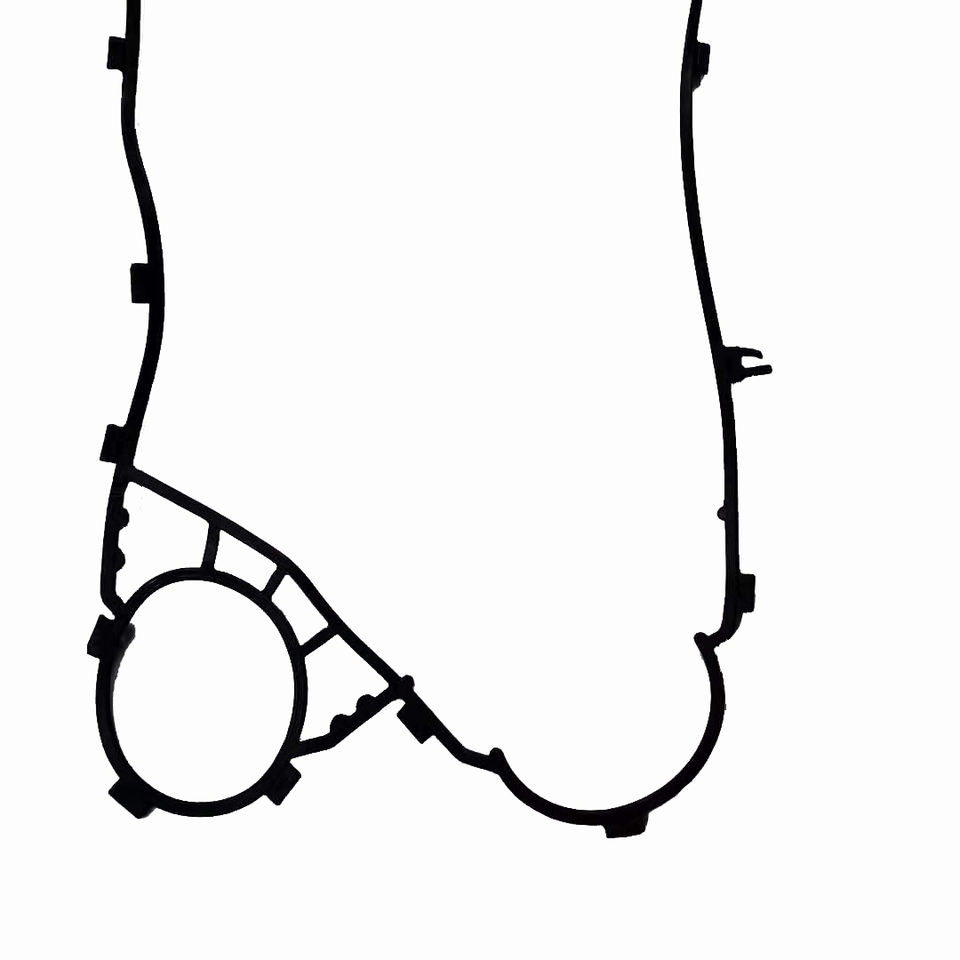
 Rubber seals are aging parts in brazed plate heat exchangers. The leakage of the heat exchanger indicates that the rubber seal of the heat exchanger should be replaced with a new one. The main step in the replacement of rubber parts is to detect and test the reuse performance. If corrosion is suspected, check the wall thickness of the heat exchanger and the pipe. Clean the aged seal on the heat exchanger. Depending on the dirt, the acid and alkali cleaning tank is cleaned chemically, and the surface of the cleaned part will not be corroded by chemical media (such as gasoline).
Plate heat exchanger rubber gasket, gasket and sealing gasket is one of the important parts of plate heat exchanger. It is a ring made of material that can produce plastic deformation and has a certain strength. Most washers are cut from non-metallic sheets or manufactured by specialist factories according to specified dimensions. Its materials are asbestos rubber board, asbestos board, polyethylene board and so on.
Due to the continuous expansion of the application field of plate heat exchangers, different media and processes have different requirements for temperature resistance, pressure resistance and corrosion resistance. It is not possible to use one gasket to suit all situations, and different materials should be used for different situations. The section shape of common gasket is hexagon. Commonly used gaskets are natural rubber, neoprene rubber, nitrile rubber, EPDM rubber, silicone rubber, fluorine rubber, asbestos fiberboard and so on.
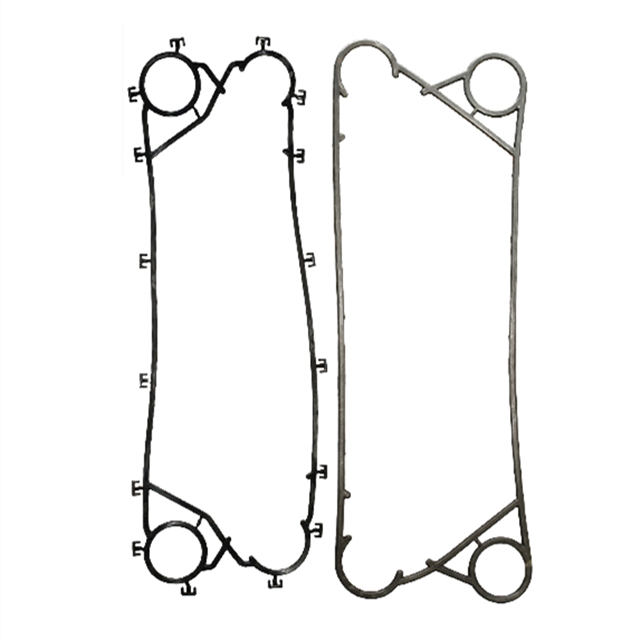
According to the flow form of the heat exchange medium, the plate of the plate heat exchanger is divided into single flow and oblique flow. Accordingly, the sealing gasket of the plate heat exchanger is divided into unidirectional flow and oblique flow according to the flow form of the heat exchange medium. Unidirectional flow means that the heat exchange medium flowing out of the right corner hole of the heat exchange plate flows out of the right corner hole. Similarly, the heat transfer medium flowing out of the left corner hole also flows out of the left corner hole. Oblique flow means that the heat transfer fluid flows in from the right corner hole and flows out from the left corner hole, or the fluid flowing in from the left corner hole flows out from the right corner hole, in an oblique flow pattern.
Our main products include shell and tube heat exchanger, brazed plate heat exchanger, gasket plate heat exchanger, etc.