

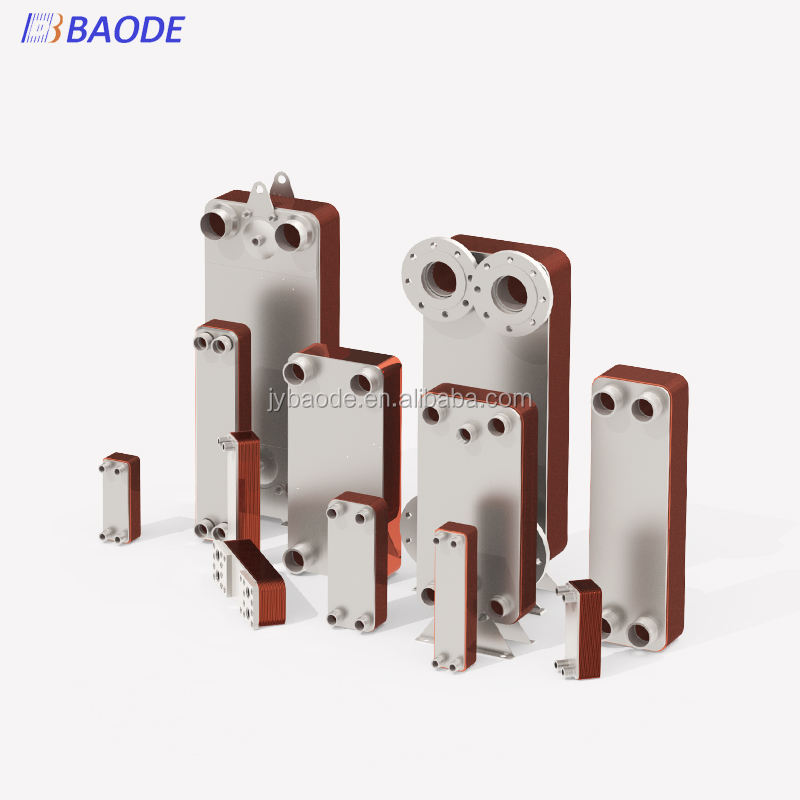
Because the soft water cooling system of medium and small blast furnace body is characterized by large flow rate and small temperature difference, the structural characteristics of the plate heat exchanger are squat, that is, the width and height ratio are large. This structure not only ensures a good heat transfer effect, but also reduces the pressure loss.
According to the characteristics of medium and small blast furnaces, the number of plate heat exchangers used in the furnace body cooling soft water system should be 3 parallel, each flow is 5O % of the maximum flow, and two are prepared for one in normal operation. According to the existing experience of soft water supply in blast furnaces, soft water supply temperature between 35 ~ 40℃ is beneficial to stable high yield and safe production of blast furnaces. At the same time, considering the cooling capacity of refrigerant water and cooling tower in summer, the temperature of softened water into blast furnaces should be less than 40℃ under the most unfavorable conditions in summer, and the temperature of softened water out of blast furnaces should be less than 45℃. That is, the temperature of softened water into the heat exchanger should be 45 ° C, and the temperature of the heat exchanger should be 40 ° C.
According to the reasonable flow rate of water in the cooling wall, the softening water flow is determined according to the maximum heat transfer in the later period of the blast furnace, especially considering the thinning of the heat-resistant layer on the inner wall and the sharp increase of heat transfer. Heat exchanger plate material Plate heat exchanger plate material is basically stainless steel, titanium alloy two kinds. Since the price of titanium material is 4 to 6 times that of stainless steel, and the plate material of the plate heat exchanger of the blast furnace cooling system can meet the requirements by using stainless steel, the plate material of the plate heat exchanger is selected as stainless steel.
The sealing material of plate heat exchanger considers the actual situation of the site and the working temperature of plate heat exchanger, softening water composition and many other factors, and the sealing material should choose EPDM rubber. The thickness of the heat exchanger plate is inversely proportional to the heat transfer coefficient. The smaller the thickness of the plate, the better the heat transfer effect, but it is also easy to corrode and leak. At present, the plate thickness of the domestic plate heat exchanger is 0.5 ~ 1.0mm, taking into account the manufacturer's manufacturing process, site operation level and corrosion, desiccation and other factors, the thickness of the heat exchanger plate should choose 0.7 ~ 0.9ram.
The soft water cooling system of medium and small blast furnace body adopts water-water plate heat exchanger, and the water temperature fluctuation is small, which completely solves the problem of insufficient cooling capacity restricting high yield, stable production, safe production and affecting the service life of blast furnace, and meets the increasing requirements of blast furnace smelting intensity and extends the service life of blast furnace. As long as the plate heat exchanger type is selected, coupled with good maintenance and maintenance, the effect will certainly be achieved in the operation of small and medium-sized blast furnaces.
Jiangsu Baode has 18 years of experience in plate heat exchanger production and sales, our main products include brazed plate heat exchanger, gasket plate heat exchanger, shell and tube heat exchanger, etc.